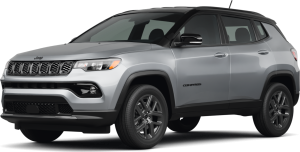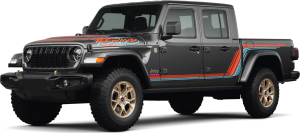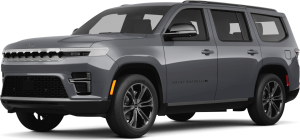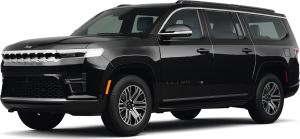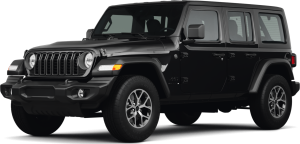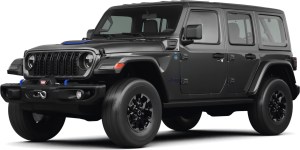
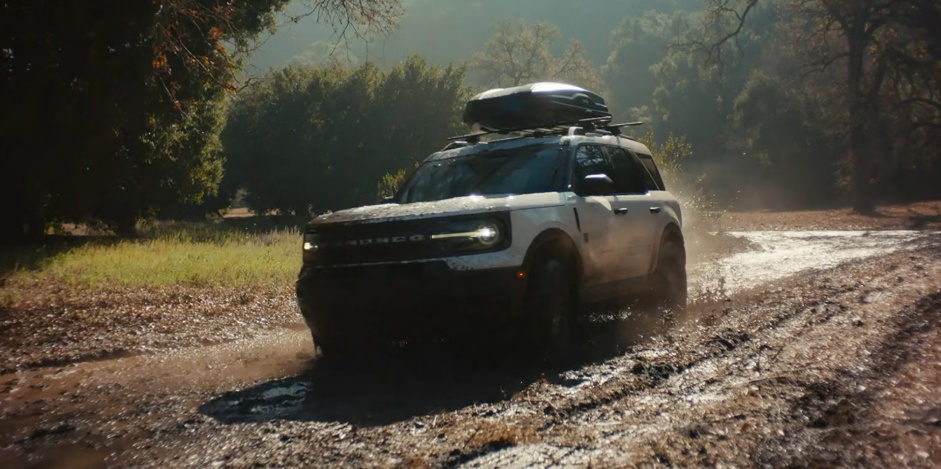
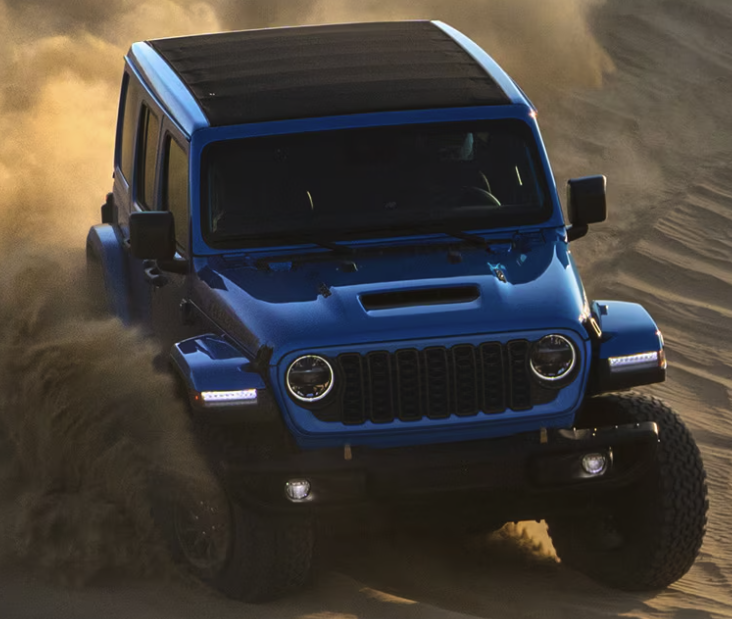
The 2026 Jeep Wrangler is the stronger choice for most Alberta buyers: it starts at a lower Canadian MSRP (~$48,000 CAD for the 4-door Sport), tows significantly more (up to 2,268 kg vs. 1,588 kg), offers the only plug-in hybrid drivetrain in this class (4xe), and holds stronger resale value over time. The Ford Bronco's independent front suspension delivers a smoother highway ride — a genuine advantage for daily drivers on the QE2. For serious off-road use, the Wrangler Rubicon's electronic locking differentials, sway bar disconnect, and 4:1 low-range transfer case give it a capability ceiling the Bronco cannot match from the factory. Both are purpose-built off-road machines; for Alberta's mix of highway commuting, winter conditions, towing, and backcountry trails, the Wrangler is the better overall package.
Key Takeaways
- The Wrangler Rubicon leads on serious trail specs: 44° approach angle, electronic front and rear locking differentials, electronic sway bar disconnect, and a 4:1 low-range transfer case — factory hardware the Bronco cannot match.
- Towing advantage: Wrangler up to 2,268 kg (5,000 lbs) vs. Bronco 1,588 kg (3,500 lbs) — a meaningful gap for Alberta drivers hauling trailers, sleds, or boats.
- The Ford Bronco's independent front suspension provides a noticeably smoother highway ride and less road noise compared to the Wrangler's solid axle setup.
- Canadian pricing: Wrangler Unlimited (4-door) starts at ~$48,000 CAD; Bronco Big Bend 4-door opens at ~$50,000 CAD — Wrangler is the more accessible entry point.
- The Wrangler 4xe plug-in hybrid is the only PHEV in this class, delivering electric-only range for daily commuting and full 4x4 capability for weekend trails.
- Both offer removable doors and roof panels; only the Wrangler allows the windshield to fold flat — a feature exclusive to Jeep.
- Wrangler retains approximately 70–75% of its value after three years in Canada, compared to 65–70% for the Bronco.
- Red Deer Dodge stocks the full Wrangler lineup at 29 Petrolia Dr, Red Deer, AB — serving Central Alberta drivers from Innisfail, Sylvan Lake, Lacombe, and Rocky Mountain House.
Canadian drivers ask us this question all the time: is the Ford Bronco vs Jeep Wrangler 2026 debate actually close, or does one clearly win? The honest answer is that it depends — but not in the vague way that usually follows that phrase. The 2026 Jeep Wrangler and Ford Bronco are genuinely different vehicles built for different priorities, and understanding those differences is what turns a frustrating choice into an obvious one.
The Wrangler has been the benchmark for off-road capability for over four decades. The Bronco returned in 2021 after a long absence and immediately challenged that reputation with modern engineering, a competitive price point, and a loyal following of its own. By 2026, both have matured significantly — better technology, stronger powertrains, and more refined interiors than ever before.
At Red Deer Dodge, we work with Jeep every day and know the Wrangler lineup inside out. This comparison is built for Alberta drivers — covering Canadian pricing, winter performance, fuel economy in cold conditions, and what each vehicle actually feels like on the QE2 and on a backcountry trail near Kananaskis. We serve drivers from across central Alberta, including those coming from Innisfail and Sylvan Lake. Call us at (403) 346-2035 to book a Wrangler test drive or ask any questions.
Key Differences at a Glance
Before diving into each category, here's what separates these two vehicles at the most fundamental level. The Wrangler is a purpose-built off-road machine with decades of trail refinement behind it. The Bronco is a modern reinterpretation of the same idea — with some genuine innovations of its own. Both have removable doors and roofs. Both are Trail Rated or equivalent. But their engineering philosophies diverge in ways that matter on the trail and on the highway.
| Feature | 2026 Ford Bronco | 2026 Jeep Wrangler |
|---|---|---|
| Design Philosophy | Retro-modern, boxy styling | Classic rugged heritage |
| Suspension | Independent front suspension | Solid front and rear axles |
| Removable Components | Doors, roof panels, fenders | Doors, roof, fold-flat windshield |
| Hybrid Option | No | Yes — 4xe plug-in hybrid |
| Max Towing Capacity | 1,588 kg (3,500 lbs) | 2,268 kg (5,000 lbs) |
| Starting MSRP (Canada, 4-door) | ~$50,000 CAD | ~$48,000 CAD |
Performance and Engine Options
The powertrain story is one of the most meaningful differences between these two vehicles. The Bronco offers two turbocharged engines — a 2.3L EcoBoost four-cylinder producing 224 kW (300 hp) and 441 Nm of torque, and a 2.7L EcoBoost V6 producing 246 kW (330 hp) and 563 Nm. Both pair with a smooth 10-speed automatic. The Bronco's independent front suspension makes that power feel planted on the highway — a real advantage for daily drivers doing long stretches of the QE2.
The Wrangler gives you more choices: a 2.0L turbocharged four-cylinder (201 kW / 270 hp, 400 Nm), a 3.6L Pentastar V6 (213 kW / 285 hp, 353 Nm), and the 4xe plug-in hybrid producing a combined 280 kW (375 hp) with electric-only range for daily commuting before switching to trail mode on weekends. The Wrangler's solid axle setup gives it better traction articulation off-road, though it can feel less composed at highway speeds compared to the Bronco's independent front suspension.
Fuel Economy in Canadian Conditions
| Engine | Combined (L/100 km) |
|---|---|
| Bronco 2.3L EcoBoost | 10.7 |
| Bronco 2.7L EcoBoost V6 | 12.4 |
| Wrangler 2.0L Turbo | 10.2 |
| Wrangler 3.6L V6 | 11.8 |
| Wrangler 4xe Hybrid | 4.2 Le/100 km (combined) |
Alberta winters typically add 10–15% to real-world fuel consumption on any of these engines. The Wrangler 4xe is the standout for drivers who commute daily and only go off-road on weekends — the electric-only range covers most in-city driving before the gas engine kicks in. The Wrangler also has a meaningful towing advantage, rated to 2,268 kg (5,000 lbs) on V6 models versus the Bronco's 1,588 kg (3,500 lbs) — worth noting for anyone planning to tow a boat to Sylvan Lake or haul a sled trailer.
Off-Road Capability: Where Legends Are Made
This is the section that matters most to buyers choosing between these two vehicles. Both are genuinely capable off-road machines — far ahead of any crossover or typical SUV. But they achieve that capability differently, and those differences show up on specific types of terrain.
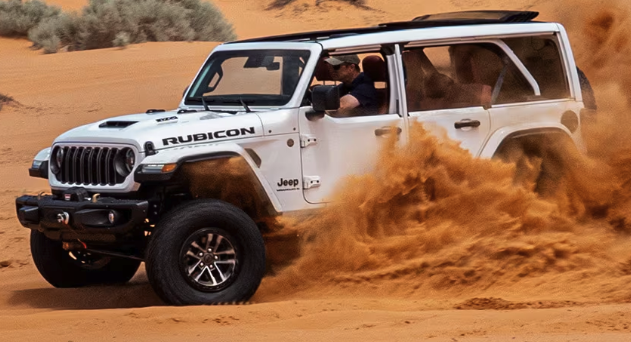
Ford equips the Bronco with its Terrain Management System and seven G.O.A.T. (Goes Over Any Type of Terrain) modes — including Mud/Ruts, Sand, Rock Crawl, and Baja. The Trail Turn Assist feature brakes the inside rear wheel to tighten your turning radius on switchbacks, which is a clever innovation. Jeep counters with the Wrangler Rubicon's Rock-Trac 4x4 system: a 4:1 low-range transfer case, electronic front and rear locking differentials, and an electronic sway bar disconnect for maximum wheel articulation. The Rubicon also carries a dedicated Rock terrain mode not available on the Bronco.
Off-Road Specs Compared
| Off-Road Spec | 2026 Ford Bronco | 2026 Jeep Wrangler Rubicon |
|---|---|---|
| Approach Angle | 37.2° | 44.0° |
| Departure Angle | 37.0° | 37.0° |
| Breakover Angle | 29.0° | 27.8° |
| Water Fording Depth | 851 mm | 853 mm |
| Front Locking Differential | Available (Badlands) | Standard (Rubicon) |
| Rear Locking Differential | Available (Badlands) | Standard (Rubicon) |
| Sway Bar Disconnect | Not available | Electronic, standard (Rubicon) |
| Trail Turn Assist | Standard (select trims) | Not available |
| Rock Mode | Yes (G.O.A.T.) | Yes (dedicated Rock mode) |
The Wrangler Rubicon holds the advantage on approach angle — a commanding 44° versus the Bronco's 37.2° — meaning it can climb steeper obstacles without the front bumper catching first. The Bronco wins on breakover angle (29.0° vs 27.8°), helping it clear sharp ridge crests. On most Alberta backcountry trails — including routes in the Clearwater Forest and the eastern slopes of the Rockies — the Rubicon's locking differentials and sway bar disconnect give it an edge in the roughest conditions. For a detailed breakdown of Wrangler trim capability, our Rubicon vs Sahara guide covers every off-road spec.
Interior Comfort and Technology
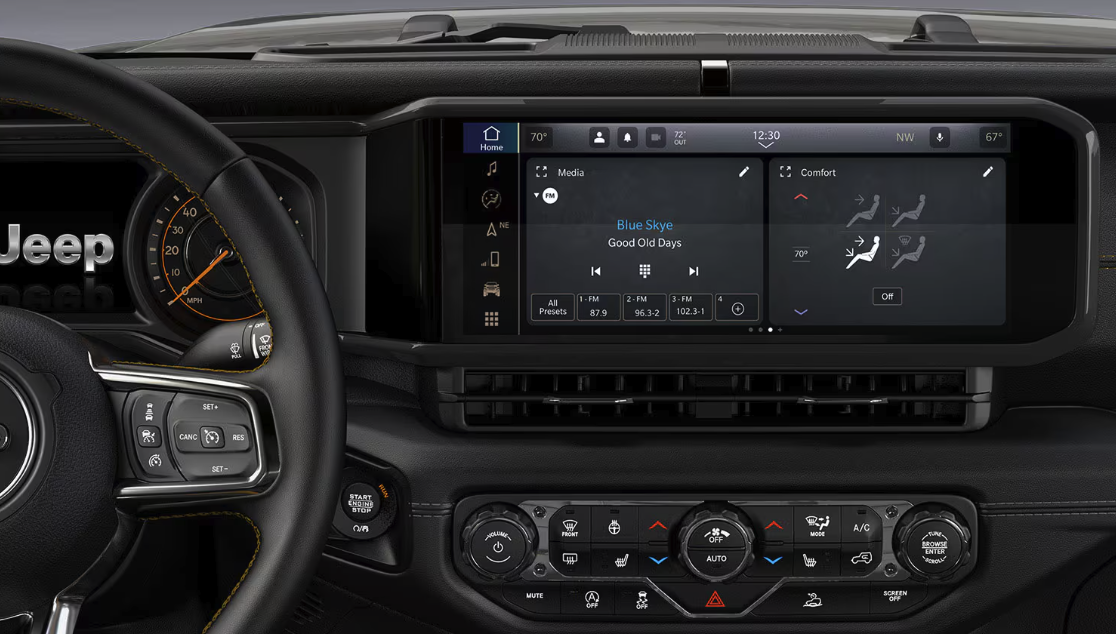
Both vehicles have come a long way in cabin quality. The 2026 Bronco offers 1,095 mm of front legroom and 922 mm in the rear, with 935 litres of cargo space behind the rear seats. Ford's SYNC 4 infotainment runs on a 12-inch touchscreen with wireless Apple CarPlay, Android Auto, and built-in navigation. The Bronco's independent front suspension also contributes to noticeably less road noise and a smoother highway ride compared to the Wrangler.
The Wrangler offers 1,047 mm of front legroom and 972 mm in the rear — slightly less front room but more rear legroom, making the back seat more comfortable for taller passengers on long drives. Uconnect 5 runs on a screen up to 12.3 inches and is widely regarded as one of the most responsive infotainment systems in the segment. Both vehicles are winter-ready with available heated seats, heated steering wheels, and remote start across their respective lineups.
Interior and Tech Comparison
| Feature | 2026 Ford Bronco | 2026 Jeep Wrangler |
|---|---|---|
| Infotainment System | SYNC 4 | Uconnect 5 |
| Touchscreen Size | 12 inches | Up to 12.3 inches |
| Wireless Apple CarPlay / Android Auto | Yes | Yes |
| Front Legroom | 1,095 mm | 1,047 mm |
| Rear Legroom | 922 mm | 972 mm |
| Cargo Space (Behind Rear Seats) | 935 L | 897 L |
| Heated Front Seats | Available | Available |
| Remote Start | Available | Available |
Exterior Design and Customization
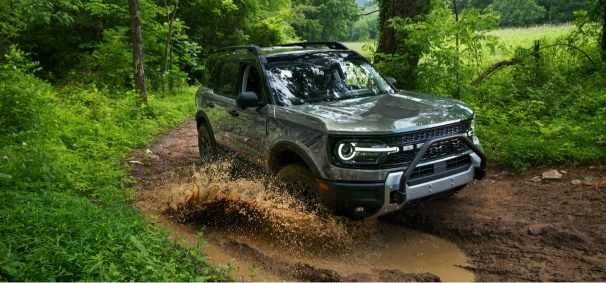
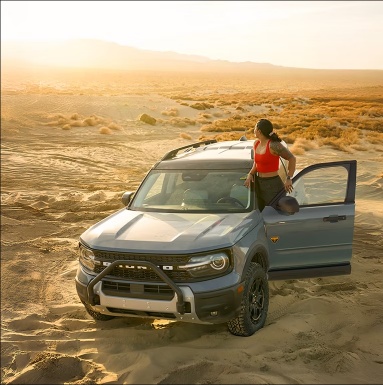
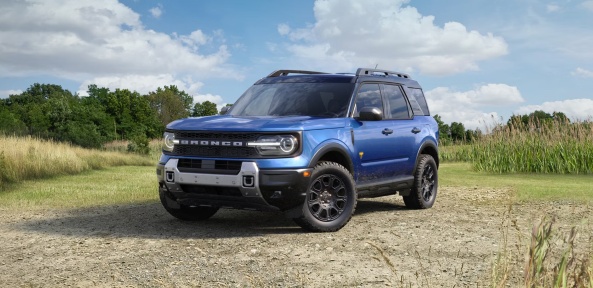
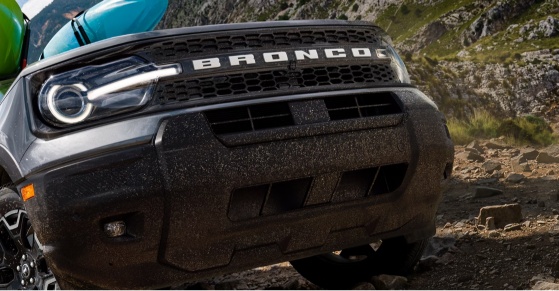
The Bronco's boxy retro silhouette with round headlights and flat panels draws obvious inspiration from the original 1966–1977 Bronco. For 2026, Ford has refreshed the front end with full-width LED lighting that gives it a more modern look while keeping the heritage feel. A new 60th Anniversary Edition on the Outer Banks trim — available in the returning Wimbledon White colour — celebrates the model's roots. New Avalanche Gray has also been added to the palette. The Wrangler's iconic seven-slot grille, round headlights, and military heritage styling are equally distinctive. For 2026, Jeep celebrates with an 85th Anniversary Edition, adding special badging and unique interior appointments to mark the Wrangler's history.
Both offer open-air freedom through removable doors and roof systems. The Bronco's modular hardtop allows individual panel removal or full roof-off configuration. The Wrangler's Sky One-Touch power top opens with a button, with full roof removal also available. The Wrangler adds the ability to fold down the windshield flat — a feature unique to the Jeep and beloved by long-time Wrangler owners. Both have thriving aftermarket ecosystems, with the Wrangler's Mopar accessories catalogue being one of the most extensive in the industry.
| Exterior Feature | 2026 Ford Bronco | 2026 Jeep Wrangler |
|---|---|---|
| Max Factory Tyre Size | 35-inch | 33-inch or 35-inch (Xtreme Recon) |
| Removable Doors | Yes | Yes |
| Removable Roof | Modular hardtop | Sky One-Touch power top |
| Fold-Flat Windshield | No | Yes |
| Colour Options | 11+ | 12+ |
| Accessories Programme | Ford Accessories Catalogue | Mopar Accessories |
Price Comparison and Value in the Canadian Market
For 2026, the Wrangler actually enters at a lower price point than the Bronco for most Canadian buyers — the Wrangler Sport 2-door starts at approximately $44,000 CAD all-in (including freight and PDI), while the Bronco Big Bend 4-door opens at around $50,000 CAD. The Wrangler Unlimited Sport (4-door) starts at approximately $48,000 CAD, still below the Bronco's comparable 4-door entry. The gap closes in the mid-range, and both reach above $90,000 CAD at their performance top trims — the Bronco Raptor and Wrangler Rubicon 392.
Trim Level Pricing Overview (Canada)
| Trim Level | 2026 Ford Bronco (CAD) | 2026 Jeep Wrangler (CAD) |
|---|---|---|
| Base / Sport (entry 4-door) | ~$50,000 | ~$48,000 |
| Mid-Range | ~$60,000 | ~$58,000 |
| Performance Top Trim | ~$90,000 (Raptor) | ~$93,000 (Rubicon 392) |
Long-Term Ownership Costs
Estimated annual fuel costs in Alberta run approximately $2,800 CAD for the Bronco versus $3,100 CAD for the Wrangler — a modest difference reflecting the Bronco's slight fuel economy edge. Insurance in Alberta runs $2,200–$2,500 per year for both. Routine maintenance for the first five years averages around $800 annually for each. The Wrangler's reputation for strong resale value is well established — it retains approximately 70–75% of its original value after three years in Canada, compared to the Bronco's estimated 65–70%. For buyers planning to sell or trade in within five years, that gap is worth factoring into the total cost of ownership.
Warranty Coverage
| Warranty Type | 2026 Ford Bronco | 2026 Jeep Wrangler |
|---|---|---|
| Basic Coverage | 3 years / 60,000 km | 3 years / 60,000 km |
| Powertrain Coverage | 5 years / 100,000 km | 5 years / 100,000 km |
| Corrosion Perforation | 5 years / unlimited km | 5 years / 160,000 km |
| Roadside Assistance | 5 years / 100,000 km | 5 years / 100,000 km |
Real-World Driving in Alberta
Spec sheets are useful but they don't capture what it's like to drive either vehicle on a -25°C Red Deer morning, or on a rutted fire road in the foothills after three days of rain. In the real world, the Bronco's independent front suspension is a genuine advantage on the highway — it tracks straighter, absorbs bumps more smoothly, and produces less road noise on long stretches. The Wrangler's solid axles are a trail advantage and a highway trade-off. Experienced Wrangler owners accept this; buyers coming from a car or crossover sometimes find it surprising on their first long drive.
In packed snow and on black ice, both vehicles perform confidently with proper winter tyres installed. The Wrangler's available Snow terrain mode and the Bronco's Slippery G.O.A.T. mode both help manage traction on icy Alberta side streets. The Wrangler has a slightly tighter turning circle (11.2 m versus 11.6 m), making it marginally easier to manoeuvre in Red Deer's parking lots and tighter downtown streets.
| Daily Driver Spec | 2026 Ford Bronco | 2026 Jeep Wrangler |
|---|---|---|
| Fuel Tank Capacity | 79.5 L | 81.4 L |
| Turning Circle (4-door) | 11.6 m | 11.2 m |
| Cargo Space (Behind Rear Seats) | 935 L | 897 L |
| Highway Ride Quality | Smoother (independent front suspension) | Firmer (solid axles) |
| Visibility | Good | Excellent |
Which Should You Buy?
The Bronco is the stronger choice if you prioritize on-road comfort, want the smoothest possible highway ride, value more cargo space in the cabin, or are drawn to its modern tech and fresh styling. At its base price point it also represents the more accessible entry into this class for 4-door buyers. If most of your off-roading is mixed terrain — gravel forest roads, moderate trails, and snowy Alberta backroads — the Bronco handles all of it confidently.
The Wrangler is the right pick if serious off-road capability is a priority, you plan to tow regularly, want the 4xe hybrid drivetrain for daily efficiency, or value stronger long-term resale. The Rubicon in particular offers factory trail hardware that would cost significantly more to replicate on the Bronco. Decades of off-road refinement show up in details that only matter on a trail — and those details are hard to argue with. For a deeper look at which Wrangler trim best matches your needs, our Rubicon vs Sahara comparison covers every spec in detail. If you're also considering a larger Jeep, our Grand Cherokee vs Grand Cherokee L guide is worth a read.
Red Deer Dodge carries the full Wrangler lineup at 29 Petrolia Dr. We can't put you behind the wheel of a Bronco, but we can put you in a Wrangler Sahara and a Rubicon on the same day so you can feel the difference. Call us at (403) 346-2035 or stop in any time.
FAQ
Which is better for off-road capability in 2026 — the Ford Bronco or Jeep Wrangler?
What are the starting prices for the Ford Bronco and Jeep Wrangler in Canada for 2026?
What is the towing capacity difference between the 2026 Bronco and Wrangler?
Which is better as a daily driver in Canadian winters — the Bronco or Wrangler?
Which vehicle holds its resale value better in Canada?